Amed: East Bali’s Snorkel and Dive Coast Under Mt Agung
Three days on the quiet east coast — black-sand beaches, a USS Liberty wreck dive, and a volcano in the background of every photograph.
📍 Amed, Karangasem, Bali, Indonesia
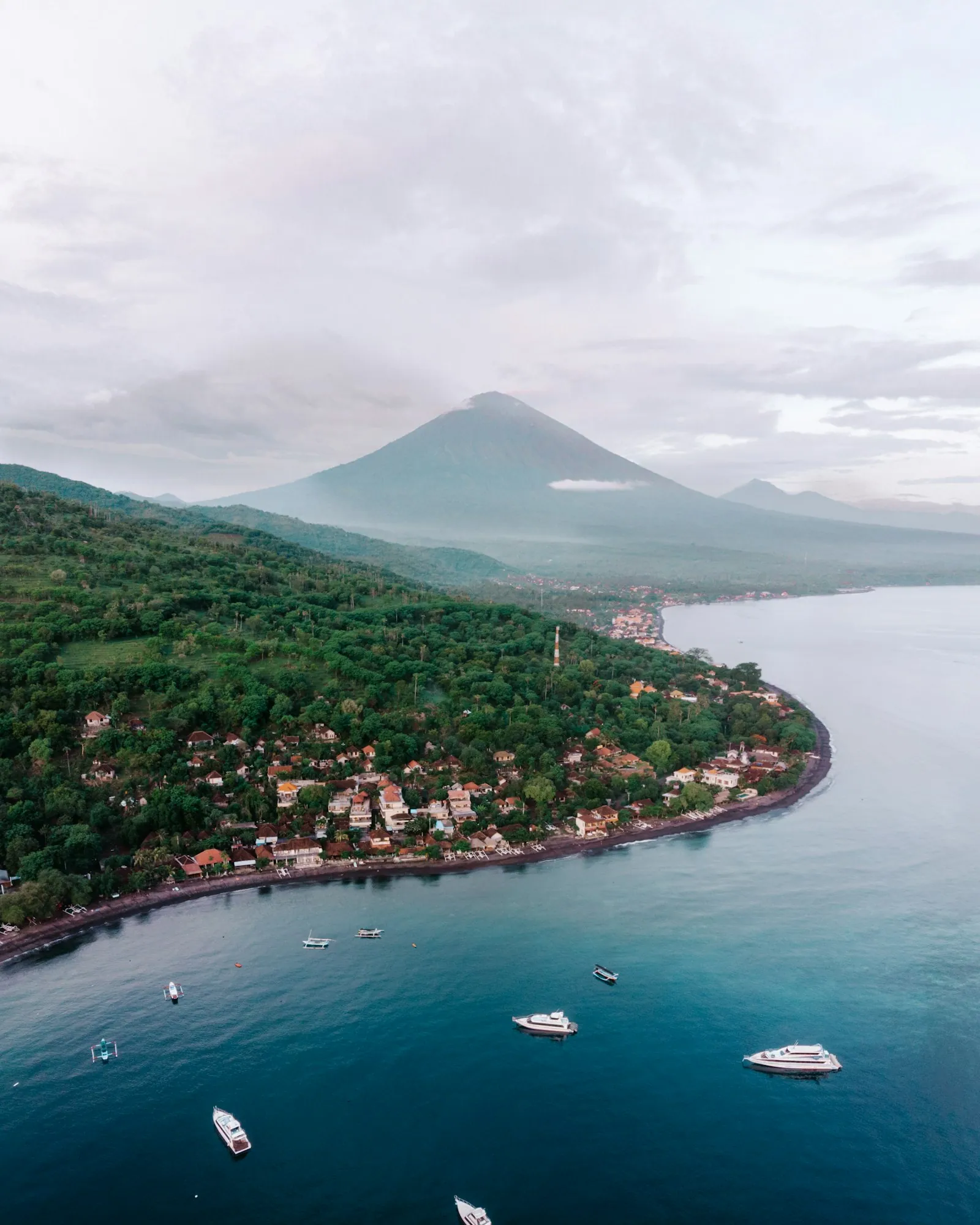
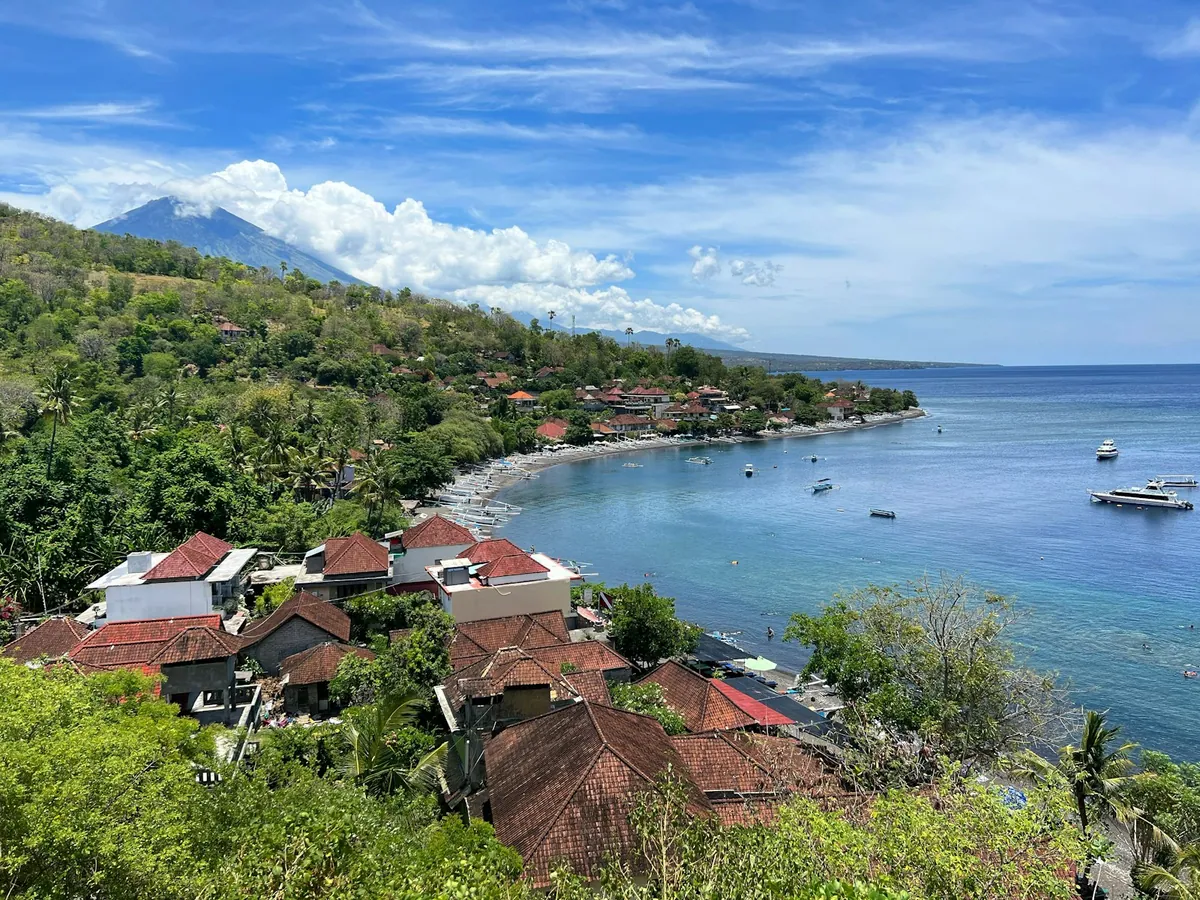
Amed is a string of small fishing villages along the dry, black-sand east coast of Bali, in the Karangasem regency, sitting in the rain shadow of Mt Agung — the great 3,031-metre volcano that defines the eastern half of the island. The contrast with the south coast is total. Where Seminyak is loud, Amed is quiet. Where Canggu is dense with cafes, Amed has maybe a dozen restaurants spread across eight kilometres of coastal road. Where the south sees thousands of visitors a day, Amed sees a couple of hundred. The water is clear, the snorkelling is exceptional, the dive sites are world-class, and the silhouette of Agung sits in the background of every photograph.
Three days is the right length for a first visit. Add a fourth if you want to do the proper dive trip to the USS Liberty.
The setup
Amed is about three hours from the south coast by car. Hire a driver — there’s no reasonable public transport. The drive takes you east through Sidemen and along the spectacular coastal road as you round the southern flank of Mt Agung. The first time the volcano appears through the windscreen, fully clear of cloud, you will quietly say something out loud.
“Amed” is a loose name for a string of small bays — from Amed proper at the southern end, through Jemeluk Bay (the snorkelling heart), Lipah, Selang, and on to the dive village of Tulamben twenty minutes north. Most accommodation is in small family-run hotels and dive resorts along the coast road. Cost: $40–100 per night for somewhere good with a pool and breakfast.
Day one: arrival, snorkel at Jemeluk
Arrive in the early afternoon. Drop your bags. Get in the water. Jemeluk Bay, in the middle of the Amed strip, has a healthy fringing reef accessible from the beach — you can wade out from the sand with a snorkel and mask and within ten minutes you’re over corals, surgeonfish, parrotfish, and the small reef sharks that drift through in the late afternoon.
Get a snorkel set from one of the warungs along the beach (about $5 for the day). Wade out from the southern end of the bay and swim along the reef towards the centre. The visibility is normally 15–25 metres. Watch for the small underwater shrine — yes, an actual underwater Hindu shrine — that the locals have established a few hundred metres offshore as part of a marine restoration project. It’s only about 5 metres deep, accessible to a snorkeller.
End the afternoon at one of the cliff bars at the northern end of the bay. Sunset Point Bar (yes, that’s the name) sits on a small headland with a deck looking back south, and the sunset light catches Agung from behind in a way that makes for proper drama.
Day two: the USS Liberty wreck dive at Tulamben
If you’re a certified diver — even at open-water level — the single most important thing you can do in Amed is dive the USS Liberty shipwreck at Tulamben.
The Liberty was a US Army cargo ship torpedoed by a Japanese submarine off Lombok in January 1942. Damaged but afloat, she was towed across to the Bali coast and beached at Tulamben for salvage. Then, in 1963, the eruption of Mt Agung shifted her off the beach and into the water, where she now sits parallel to the shore in 5–30 metres of water — accessible by walking out from the beach with a tank and a guide. The wreck is 120 metres long, broken into several large sections, encrusted in coral, populated by thousands of fish and a resident green turtle, and one of the easiest world-class wreck dives anywhere.
Most Amed dive shops will run a day-trip package — two dives, lunch, gear, transport from your hotel — for around $80–110. I went with Eco Dive (a long-running Amed PADI shop). Two dives on the Liberty, surface interval at the local warung. The visibility was 18 metres on the first dive and 20 on the second. The wreck is dense with fish — bumphead parrotfish on the upper deck, groupers in the cargo holds, sweetlips drifting along the hull at depth. About forty minutes into the second dive, a green turtle the size of a coffee table came up alongside me and let me follow her at arm’s length for ten minutes before quietly drifting up the slope and disappearing. Best dive of my Bali trip. By a long way.
If you don’t dive but you do snorkel, you can also see the upper sections of the Liberty at 5 metres deep from the surface. The visibility makes the wreck shape clear from above. Walk out from the Tulamben beach with a mask and fins, swim directly out from the rocky shore, and the bow of the ship rises out of the sand within fifty metres. Local kids will offer to guide you for a small tip — take them up on it; they know the orientation.
Day three: a slow last day
Day three is for slowness. Have a long breakfast on your hotel deck. Walk a stretch of the coast road you haven’t walked. Hire a small jukung — the traditional fishing outriggers you’ve been seeing all over the bay — for an hour to take you out for a snorkel at one of the further sites (Pyramids, Drop Off, Japanese Wreck). The wreck I’m talking about there is a much smaller boat (a Japanese patrol vessel from WWII) lying upright in 12 metres at the northern end of Lipah Bay; lovely to snorkel at.
In the afternoon, hike the small hill behind Amed to the Lempuyang Temple complex — which has the famous “Gates of Heaven” shot, where the silhouette of Mt Agung appears framed perfectly between two split temple gates. The temple is a 90-minute drive from Amed, so this is a half-day expedition; if you can’t fit it, the drive on the way back to the south coast is the better moment to visit. (And: the “water reflection” you’ve seen in the iconic photographs is created by a piece of mirror or glass held under the camera by the local photographer at the temple. It’s not a real puddle. It’s also a perfectly fine bit of theatre — bring small notes for the photographer’s tip.)
How nice are people in Amed?
Small-village nice. Amed has a much smaller tourism infrastructure than the south, and the same families have been running the homestays, dive shops, and warungs for years. My three days included: a homestay owner walking me to the right warung when I asked for a recommendation; a dive shop instructor noticing I was nervous on my first wreck dive and staying within touching distance of me for the entire descent without making me feel watched; and a beach masseuse who threw in an extra ten minutes “because you got sunburnt today, you need it.” The warmth is consistent. So is the patience.
If you go
• Three days minimum. Four if you’re diving the Liberty. • Stay near Jemeluk Bay if snorkelling is the priority; near Tulamben if diving is. • Pack reef-safe sunscreen. The reefs here are healthy and worth keeping that way. • Hire a driver for the trip in and out — the road is winding and the public transport is unreliable. • Don’t try to combine Amed with a Mt Batur sunrise hike on the same trip. They’re both great; pick one and do it properly.
Amed is the slow, snorkel-and-volcano east coast of Bali. After the noise of the south, two or three days here will reset your sense of what an island holiday is supposed to feel like. The Liberty wreck is real. The turtle is real. The volcano is in the background of everything. Go.