Córdoba in Two Days: The Mezquita, the Roman Bridge and the Patios
Two days in the southern Spanish city that has been the centre of three civilisations — Roman, Moorish, and Christian — with a mosque-cathedral that defies categorisation.
📍 Córdoba, Spain
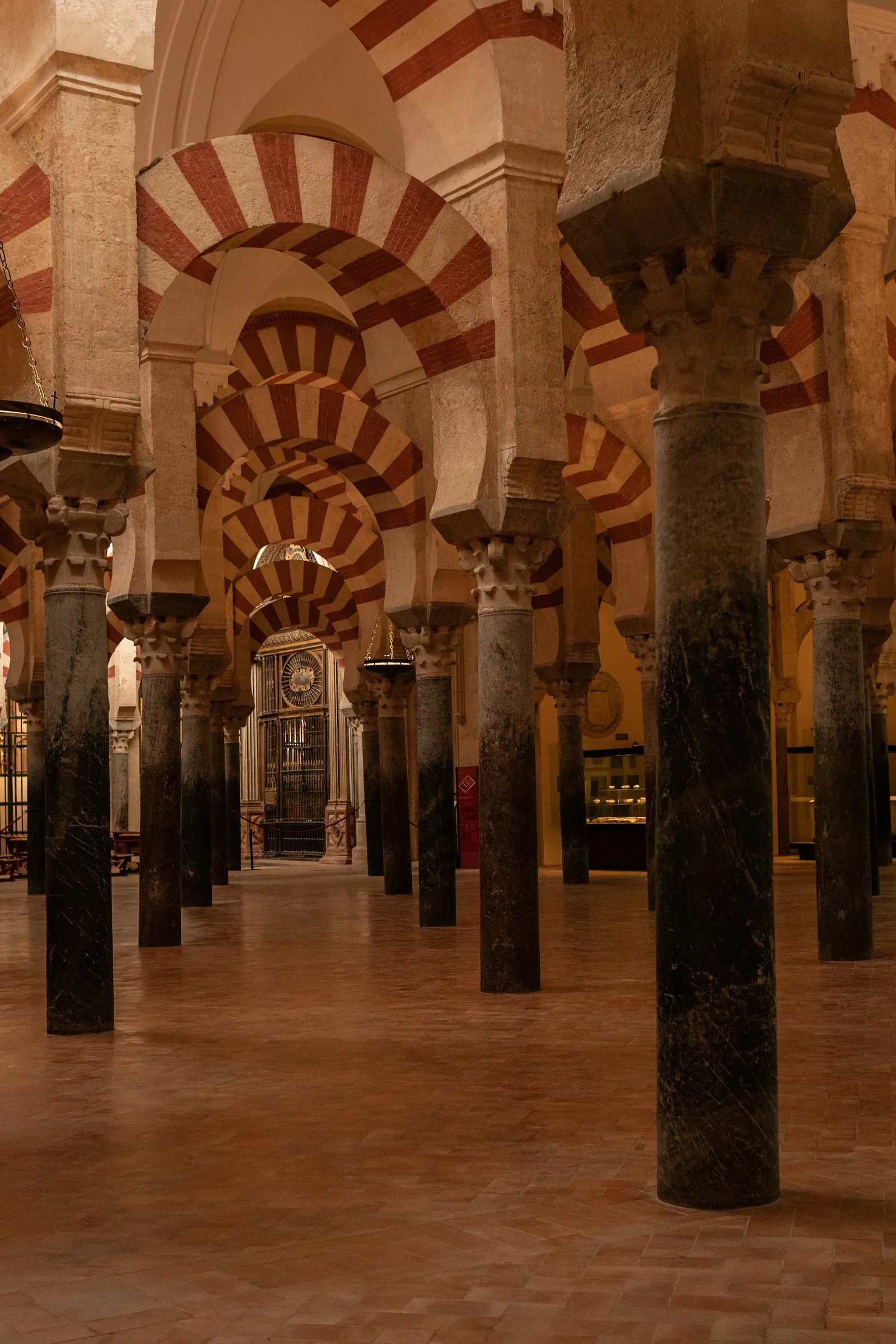
Córdoba sits on the Guadalquivir river in the centre of Andalusia, midway between Seville and Granada, and it has, in the centre of its small old town, one of the strangest and most extraordinary buildings on Earth: the Mezquita-Catedral. The Mezquita started life as the Great Mosque of Córdoba in 785, became the largest mosque in the world by the late 10th century with a forest of nearly a thousand columns supporting double-arched red-and-white brick roofs, and was then converted to a Christian cathedral after the 1236 reconquest, with a small Renaissance cathedral inserted directly into the middle of the columned hall. The result is a building that holds two completely different sacred architectures inside the same shell, a unique and slightly uncomfortable architectural document of three civilisations sharing the same physical space across a thousand years. It is, beyond any contest, one of the most interesting visits in Spain.
Two days in Córdoba is the right length. You can do it as a day trip from Seville (45 minutes by train) but you’ll wish you’d stayed.
The setup
Train from Seville (45 minutes) or Madrid (2 hours by AVE). Stay in or near the Judería (the old Jewish quarter, on the western side of the Mezquita). Mid-range hotels run €70–150 a night — Córdoba is the cheapest of the three Andalusian classics.
Walk everywhere. The historic centre is small.
Day one: the Mezquita
The Mezquita is the experience. Buy a ticket online (about €13) for the morning slot — the building is at its most atmospheric in the cool morning hours and the queues at midday are real.
You enter through the Patio de los Naranjos — the great courtyard of orange trees that was the original entrance and ablution court of the mosque. The space is beautifully proportioned, full of citrus and date palms, with the bell tower (Torre del Alminar — the original minaret, converted to a bell tower in the 16th century) at the north-west corner. From the patio you enter the prayer hall through one of the small doors in the north wall.
Then you’re inside. The first impression is overwhelming and slightly disorienting. A vast hypostyle hall — 23,400 square metres — supported by 856 columns of marble, jasper, and granite (mostly recycled from earlier Roman and Visigothic buildings on the site), each topped by a double-arched red-and-white brick voussoir, the lower arch supporting the upper, the whole creating a forest-like rhythm in every direction. The ceiling is dim. The light comes through small lanterns far above. You walk and the columns repeat. There is no end to the perspective.
Then, at the far end, the Mihrab — the small sanctuary niche that originally indicated the direction of Mecca — with extraordinarily detailed Byzantine-Caliphate gold-and-blue mosaic decoration that survived because the Christian conversion preserved it as a curiosity. The Mihrab is one of the most beautiful religious spaces in Europe.
And then, in the very middle of the columned hall, the cathedral. Built in the 16th century by inserting a high Gothic-Renaissance nave directly into the centre of the mosque, with the columns around it preserved but truncated. The contrast is shocking — soaring stone vaults, bright sunlight, gilded altarpieces — completely different in scale and atmosphere from the dim Moorish forest around it. The contemporary king Charles V, who had authorised the cathedral construction, famously visited in 1526 and reportedly said: “you have built what you or others might have built anywhere; to do so you have destroyed what was unique in the world.”
Spend two and a half hours. Don’t rush. The combination of the two architectures is the experience.
After the visit, eat lunch in the Judería — the small streets immediately surrounding the Mezquita. Reliable: Casa Pepe de la Judería, Bodegas Mezquita, or the smaller Taberna Salinas a few blocks east.
Day one afternoon: the Judería and the Alcázar
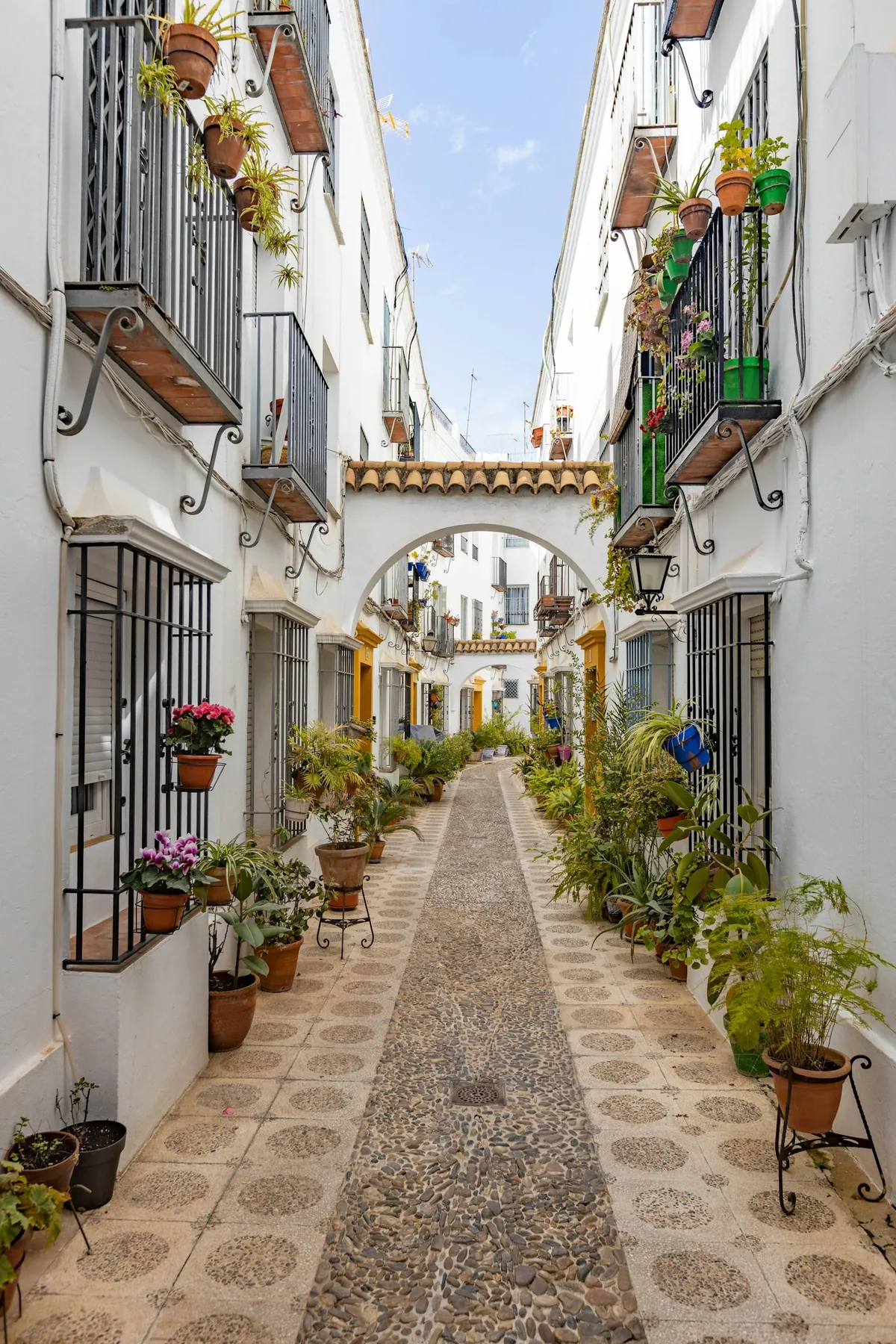
Walk the Judería — Córdoba’s old Jewish quarter, a tight grid of white-washed alleys, small squares, and tiny synagogues just west of the Mezquita. The Synagogue of Córdoba, on Calle Judíos, is one of only three synagogues from the medieval period that survive in Spain (the Inquisition expelled the Jews in 1492 and most synagogues were destroyed or converted). Small, beautiful, with original 14th-century plaster carving.
The Alcázar de los Reyes Cristianos, on the river bank just south of the Mezquita, is a 14th-century Christian-built palace on the site of an earlier Moorish palace. The interior is mostly empty (the building has been used as offices and prisons over the centuries), but the gardens behind are exceptional — formal water gardens with tall hedges, fountains, and fishponds. Allow ninety minutes for the gardens.
For dinner, eat in the Judería or at one of the riverbank restaurants near the Roman Bridge. Casa Mazal (a Sephardic Jewish restaurant), El Choto (the city’s reference restaurant for traditional Andalusian cooking), or any of the smaller bistros around Plaza del Potro.
Day two: the Roman Bridge and the patios
The Roman Bridge (Puente Romano) crosses the Guadalquivir at the southern end of the historic centre. Originally built by the Romans in the 1st century BC and rebuilt several times since (most recently in the 1990s), it’s a 247-metre bridge of 16 arches, and it is one of the most photogenic Roman engineering survivals in Spain. Walk the entire length at sunrise — the eastern light hits the Mezquita and the bridge tower (Calahorra Tower at the southern end) in a way that makes for the iconic Córdoba photograph.
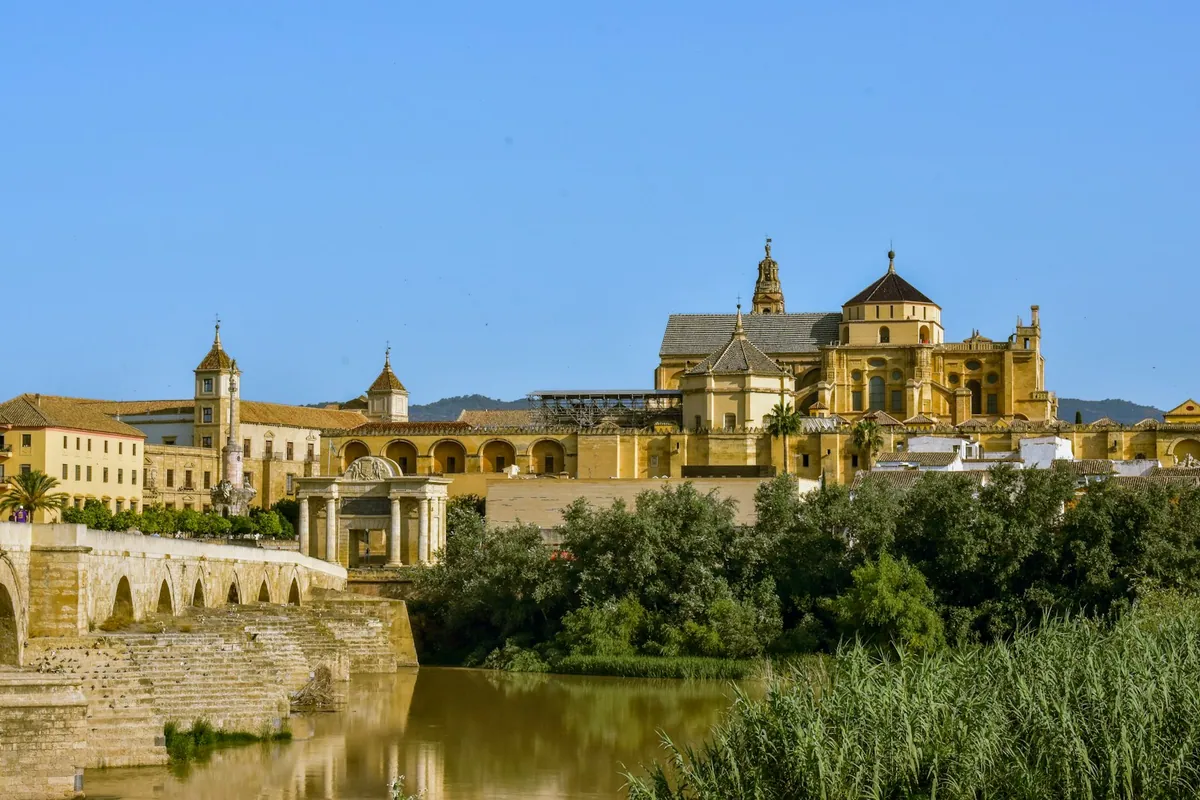
Halfway across, the Triumph of Saint Raphael (a small statue on the bridge) is where locals stop to make a wish. The Calahorra Tower at the southern end is now a small museum of Andalusian convivencia (the medieval period when Christians, Muslims, and Jews coexisted in Córdoba) — interesting half-hour visit.
In the afternoon, walk the patios. Córdoba is famous for its private interior courtyard gardens — the patios — which are individual private gardens decorated with hundreds of potted flowers (geraniums, jasmine, bougainvillea), traditional ceramic tiles, fountains, and orange trees. During the annual Patios Festival in early May, dozens of private patios are opened to the public for a week, and the city hosts one of the loveliest festivals in Spain. Outside the festival, several patios are open year-round (Palacio de Viana, with 12 different historical patios on a single estate, is the major one; the Patios de San Basilio neighbourhood has half a dozen open patios that you can visit for a small donation).
Allow a full afternoon for the patios. Walk slowly. The combination of the white walls, the colourful flowers, the small fountains, and the heat-cooled shade is the essence of Andalusian domestic architecture.
End the trip with a final dinner in the Judería or back along the river.
How nice are Cordobeses?
Andalusian-warm, slightly slower than Seville. Córdoba has a calmer, smaller-city feel than its bigger Andalusian sisters and the local hospitality is gentle and patient. Within two days I had: a Mezquita guide stay an extra ten minutes after the tour to point out the small Visigothic capital that he thought was the most interesting one in the building; a small bar owner refuse to let me pay for the second glass of fino sherry “because we’re neighbours now”; and a patio caretaker open her family’s patio especially for me when I asked at the door, refusing the donation I tried to make. Córdoba’s warmth is real and unhurried.
If you go
• Visit between February and June or September to October. July and August are too hot for serious sightseeing. • Buy Mezquita tickets online for the morning slot. • Time your visit for the early May Patios Festival if you can. • Eat the local salmorejo (the cold tomato-bread soup, thicker than gazpacho, finished with hard-boiled egg and jamón). • Walk the Roman Bridge at sunrise. Best photograph of the trip.
Córdoba is the small Andalusian city that punches enormously above its weight. Two days here will give you the Mezquita, the Roman Bridge, and the patios. You leave thinking, slightly amazed, about a building that holds three civilisations in the same hall. The Mezquita stays in your head for a long time.