Valencia in Three Days: City of Arts, the Old Town and the Best Paella
Three days in Spain’s third city — futuristic Calatrava architecture, a Gothic old town, and the dish you have to eat where it was invented.
📍 Valencia, Spain
Valencia is Spain’s third-largest city, sitting on the Mediterranean coast about 350 kilometres south of Barcelona. It is, depending on whom you ask, either the most under-rated major Spanish city or the city that has quietly figured out the right balance between beach, food, history, and modernity better than any of its bigger siblings. The historic old town is Gothic, walled, beautifully preserved. The City of Arts and Sciences at the southern end is one of the most photographed contemporary architectural complexes in Europe, designed by Santiago Calatrava (a son of the city) on the bed of an old river. The food culture is built around paella — the dish was invented here, and the Valencians have strong opinions about how it should be made — and around the city’s position between the rice fields and orange groves of the surrounding huerta and the Mediterranean fishing fleet just offshore.
Three days is the right length. You will leave wishing you’d had four.
The setup
Fly into Valencia (15 minutes from the centre by metro) or take the AVE high-speed train from Madrid (1 hour 40 minutes). Stay in the historic centre or near the Turia park. Mid-range hotels run €90–180 a night.
The metro and tram cover the whole city. The Turia park (the linear green space that runs along the bed of the diverted river) is excellent for cycling — rent a bike from one of the many city-bike stations.
Day one: the old town
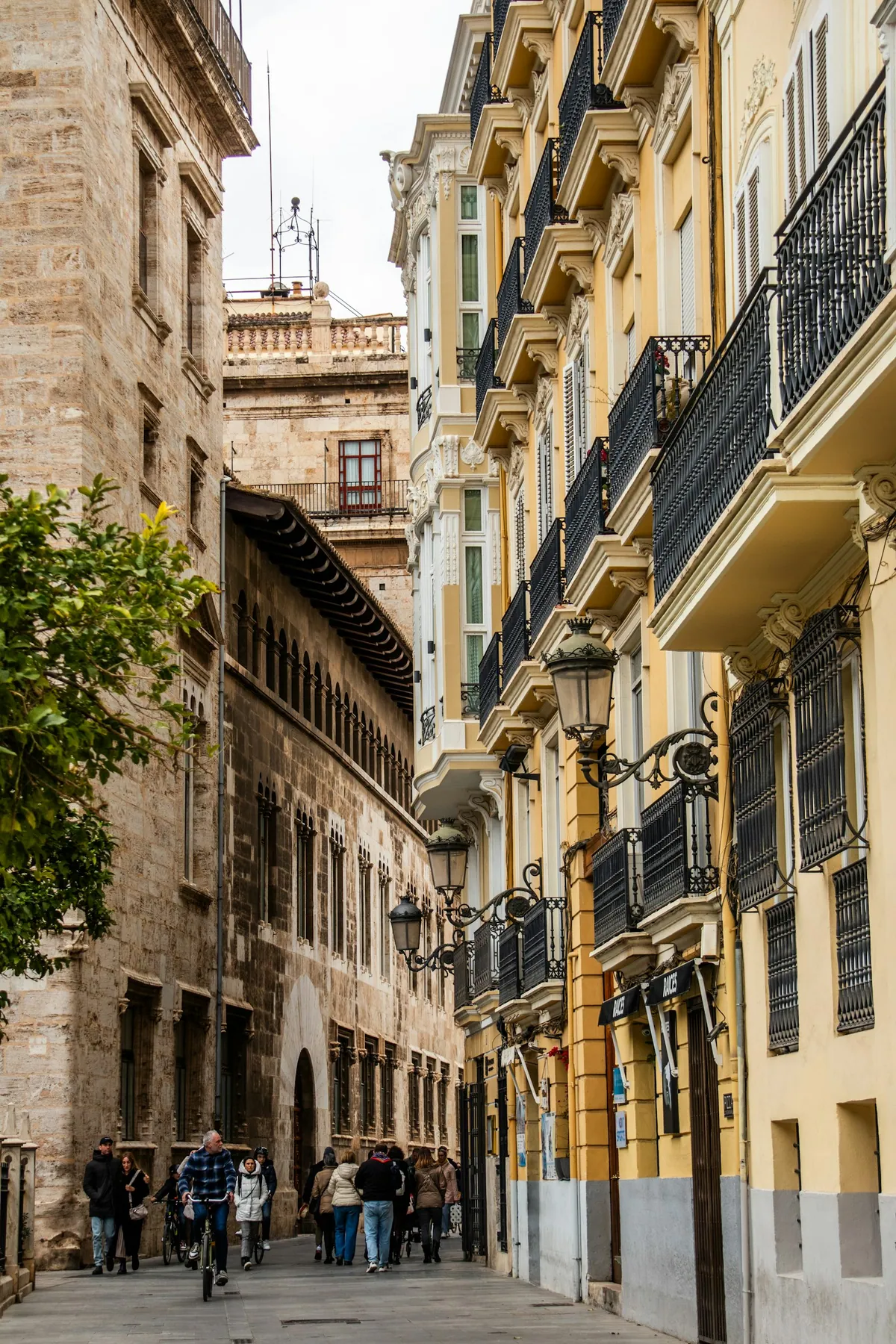
Walk into the old town first. Valencia’s historic centre is a tight grid of medieval streets, small squares, and old churches, ringed by the broad Turia gardens that follow the bed of the diverted Túria river (the river was diverted south of the city in the 1960s after a devastating flood; the old riverbed was turned into a 9-kilometre linear park).
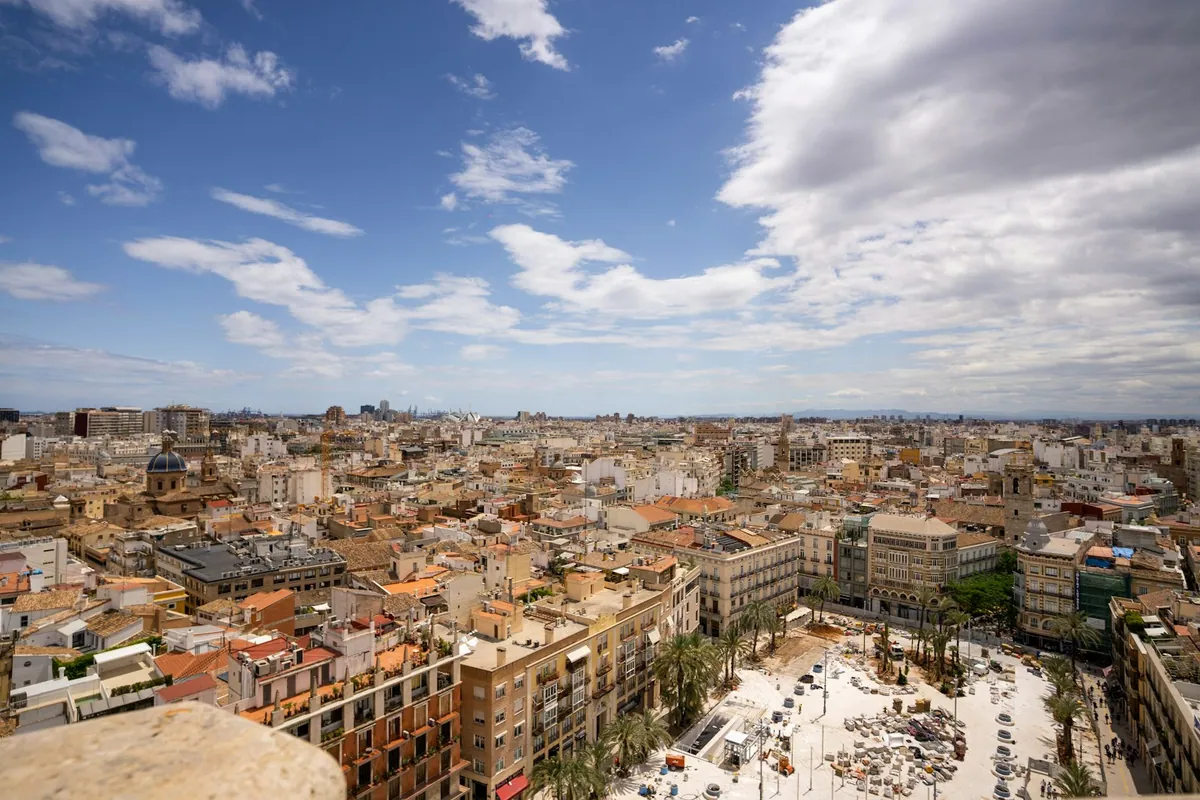
Start at Plaza de la Reina with the Cathedral. Valencia Cathedral is a beautiful Gothic-Romanesque-Baroque mix, built between the 13th and 18th centuries on the site of a former mosque. The most famous artefact inside is the Holy Chalice — a small agate cup that the Catholic Church recognises as one of the leading candidates for the actual Holy Grail used at the Last Supper. (The history is impossibly tangled but the cup itself is genuine 1st-century Middle Eastern work.) Climb the Miguelete bell tower for the city panorama.
Walk a few minutes east to the Llotja de la Seda — the 15th-century Silk Exchange, a UNESCO World Heritage site, with a beautiful columned hall and an orange-tree courtyard. Across the street is the Mercado Central — the great covered food market, opened in 1928, packed with food stalls. Buy a slice of jamón, a piece of fresh fruit, a pastry. Have a coffee at the Bar Central inside the market.
For lunch, eat in El Carmen — the bohemian medieval quarter at the north end of the old town, full of small bars, street art, and independent boutiques. Reliable spots: Tasca Ángel, Casa Mundo, La Pilareta (the old tile-walled tapas bar famous for clochinas, the small Valencian mussels).
In the afternoon, walk along the Turia gardens. The gardens have something for every taste — formal sections, jogging paths, the Palau de la Música concert hall, a vast adventure playground (the Gulliver Park, with a 70-metre statue of the giant lying on the ground that kids climb on), and the City of Arts at the south-east end.
Day two: the City of Arts and the beach
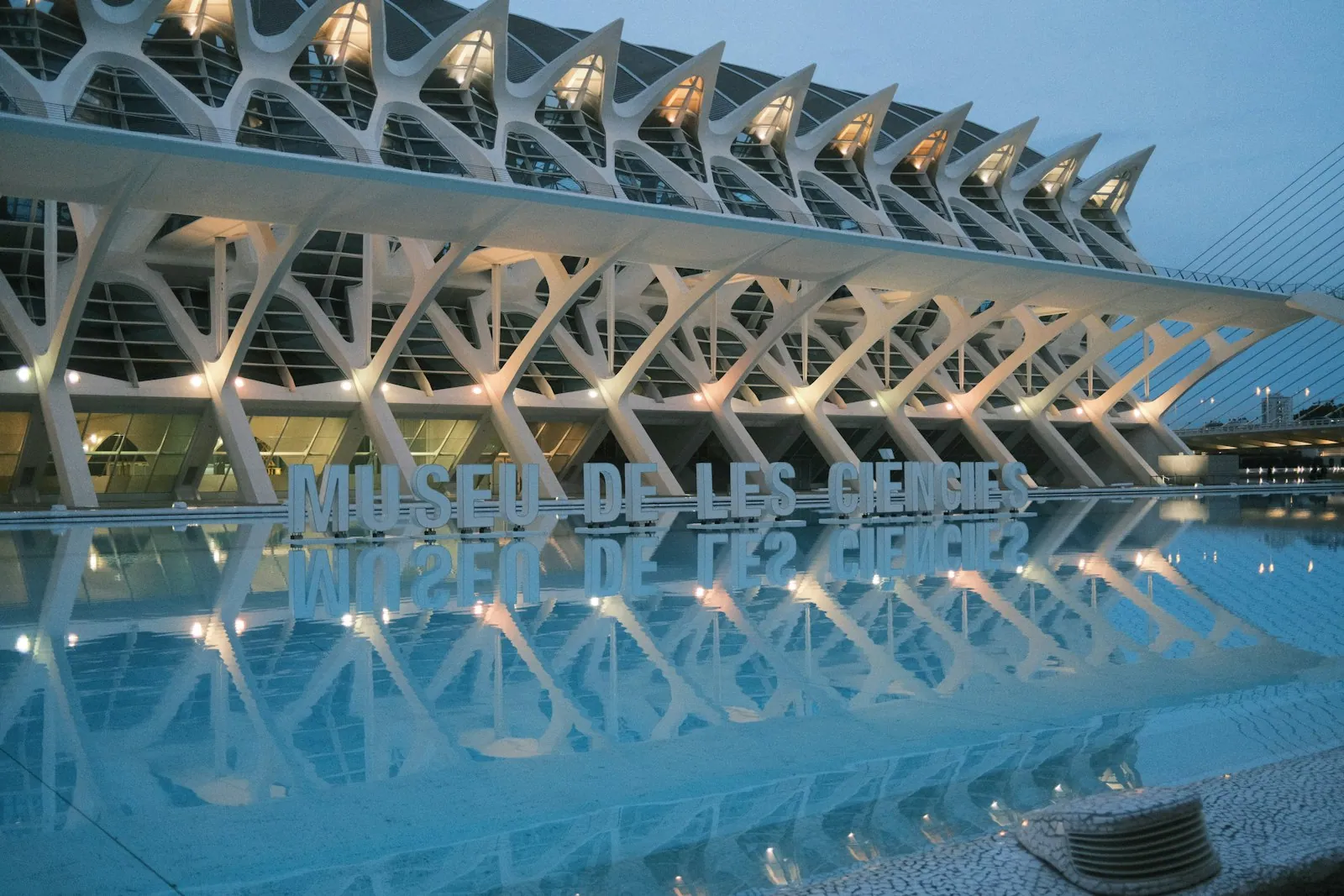
The City of Arts and Sciences (Ciudad de las Artes y las Ciencias) was built on the south-east end of the Turia bed in stages between 1998 and 2009, designed mostly by Santiago Calatrava. It is, depending on your taste, either a stunning futuristic civic project or an over-budget vanity boondoggle, but architecturally it is one of the most striking complexes in modern Europe. Six main buildings: the Hemisfèric (an IMAX cinema and planetarium shaped like an eye), the Príncipe Felipe Science Museum, L’Oceanogràfic (Europe’s largest aquarium), the Palau de les Arts Reina Sofía (the opera house), the Umbracle (a covered garden), and the Pont de l’Assut de l’Or (a soaring white bridge).
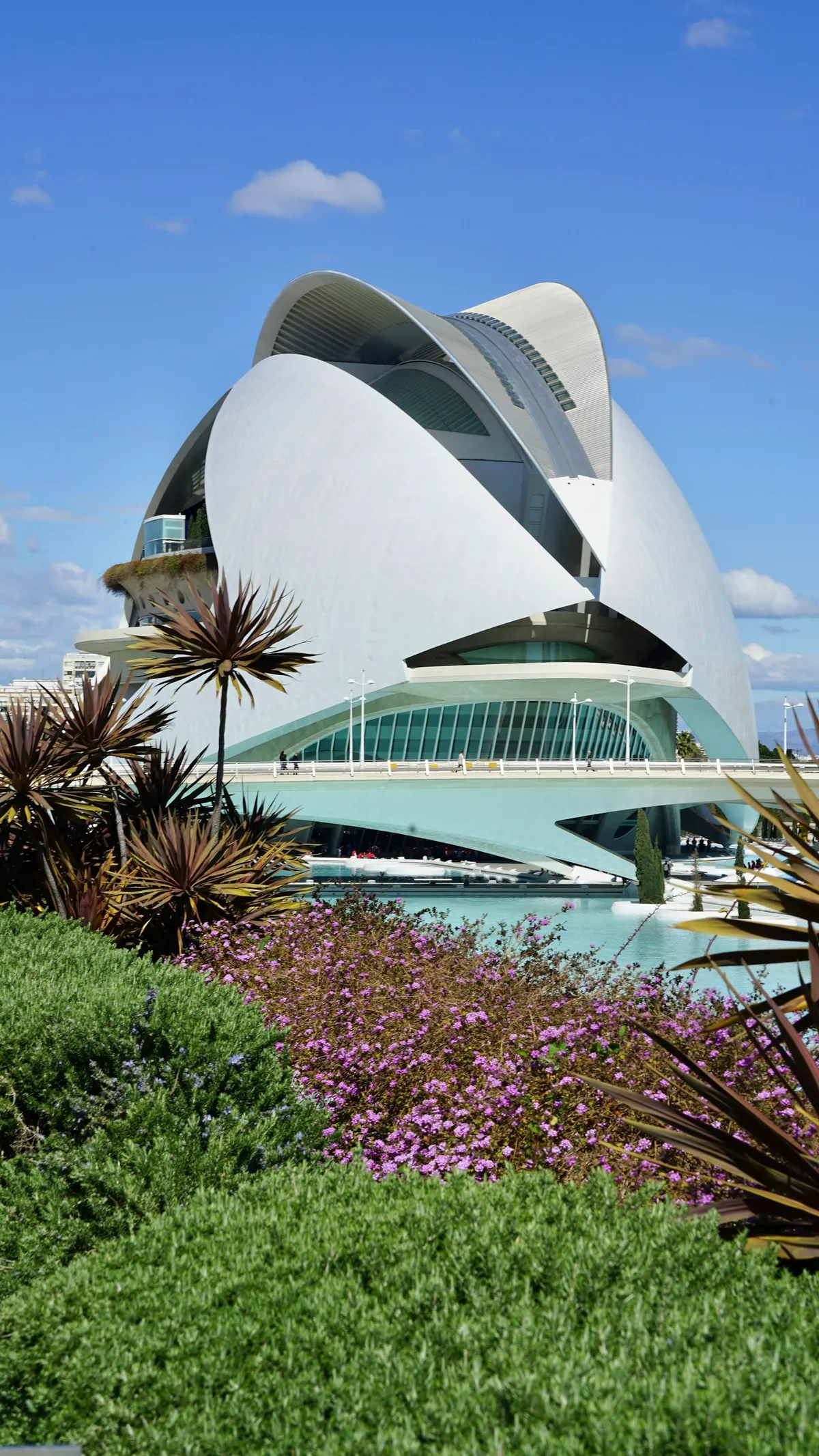
Visit one or two of the museums (the Oceanogràfic is the headline — it’s an excellent aquarium with ten themed environments including a wild dolphinarium and an underwater tunnel through a shark tank — about €35). Allow a full morning. The exterior architecture is the bigger experience — walk the long reflecting pools that run between the buildings, take the postcard photographs.
In the afternoon, take the tram or bus to the beach. La Malvarrosa is the city’s main urban beach — a long broad sand beach a few kilometres east of the centre, lined with beachfront restaurants and the city’s great paella tradition. Eat a late lunch at one of the restaurants on the beach promenade — La Pepica (the famous one, since 1898, where Hemingway used to eat) or Casa Carmela (the destination paella restaurant at the north end of the beach, wood-fired paellas).
A note on paella: the Valencian original is very specific — chicken, rabbit, green beans, garrofó (large white beans), saffron, rosemary, no fish. The seafood paella that you may have eaten at a tapas bar abroad is a different (and, to a Valencian, lesser) dish called arroz a banda or marinera. If you want the original, ask for paella valenciana. The proper one is cooked over a wood fire in a wide flat pan and is the subject of regional pride bordering on religion.
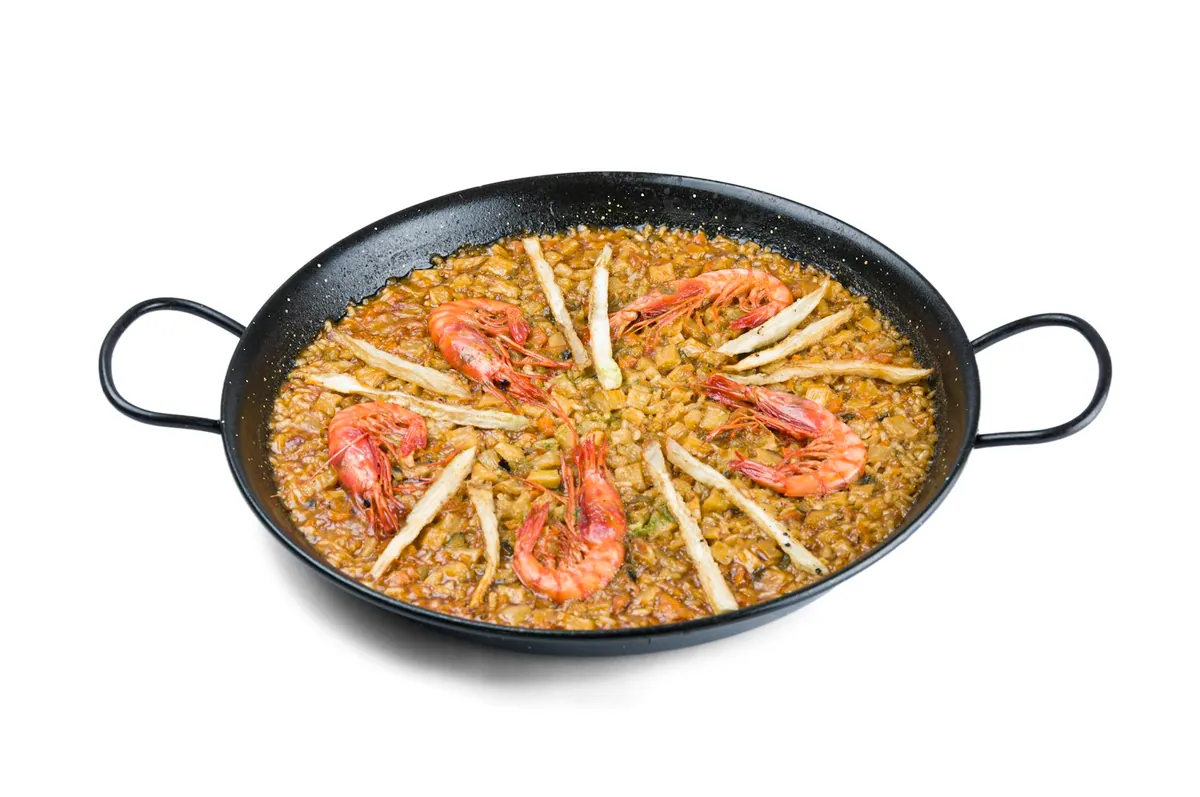
End the day at one of the chiringuitos on La Malvarrosa for a sunset drink.
Day three: the Albufera natural park
Day three, hire a car or join a small-group tour out to the Albufera natural park — the freshwater lagoon, rice paddies, and pine-lined dunes 15 kilometres south of the city. The Albufera is where Valencia’s rice is grown (the famous Bomba and Senia varieties used in proper paella) and where the dish was originally invented in the 19th century by the rice farmers and lake fishermen.
Drive (or bus) to El Palmar — a small village on the shore of the lagoon, packed with paella restaurants. Have a long Sunday lunch (the local tradition is paella at noon, served until 4 p.m.). Reliable El Palmar spots: Bon Aire, Establiment Bon Aire, La Cambra. Take a small wooden boat trip on the lagoon afterwards (the local boatmen run hour-long trips for about €5).
In the late afternoon, drive back via the Devesa pine forest along the dunes between the lagoon and the sea. Several quiet beaches if you want one final swim.
For your last evening, eat at a serious Valencia restaurant. Riff (one Michelin star, modern), Ricard Camarena (two stars, the Valencian chef setting the regional benchmark), or any of the small bistros in El Carmen.
How nice are Valencians?
Mediterranean-warm, slightly more relaxed than Madrid or Barcelona. Valencia has its own language (Valencian, a variety closely related to Catalan), its own strong identity, and a slightly slower pace. Within three days I had: a Mercado Central vendor add an extra orange to my bag “because you bought oranges, the sign of a person who knows”; a paella restaurant owner sit at our table for ten minutes telling us why his grandfather’s recipe used rosemary that had been picked at sunrise; and a beach lifeguard wave me down from a swim at sunset because the wind was coming up “and you shouldn’t be that far out, mate.” The friendliness is real and unforced.
If you go
• Three days minimum. Two leaves you wishing for more. • Eat paella at lunchtime, not dinner. The Valencians do. • Book a Sunday lunch at El Palmar weeks in advance — these places fill. • Use the metro and the trams. Easy and cheap. • Don’t skip the Turia park. Cycling its length is one of the great gentle Spanish urban experiences.
Valencia is the bit of Spain that has quietly figured out a balance most other cities haven’t. Three days here will give you the City of Arts, the medieval old town, the beach, and a real paella. You leave wishing for the apartment in El Carmen you saw advertised in a window.